The Activity View
- More leads
- More meetings
- More tools
- More dashboards
03 / 05
HOW ENGINEFLOW WORKS
EngineFlow designs how revenue-related work should move, installs the systems that support it, and establishes the rules and review rhythm required to keep it working as the company grows.

ACTIVITY IS NOT THE SYSTEM
More leads, meetings, tools, and dashboards can make a company look busy without making the revenue operation more reliable. Predictable execution requires the structure underneath the activity to be managed deliberately.
WHAT GETS BUILT
Define how leads, opportunities, customer work, renewals, and expansions move through the company.
Establish who is responsible for each stage, action, and decision.
Direct work to the right person based on clear operating rules.
Create a shared definition of what is ready to move forward.
Align stages, fields, records, and automation with the way the business actually operates.
Determine which information leadership and teams need, where it comes from, and how it is interpreted.
Establish the reviews, decisions, and accountability needed to keep the system healthy.
THE ENGINEFLOW OPERATING MODEL
EngineFlow follows a simple discipline: identify the pressure, build the right system, protect it with clear standards, and help teams execute inside it.
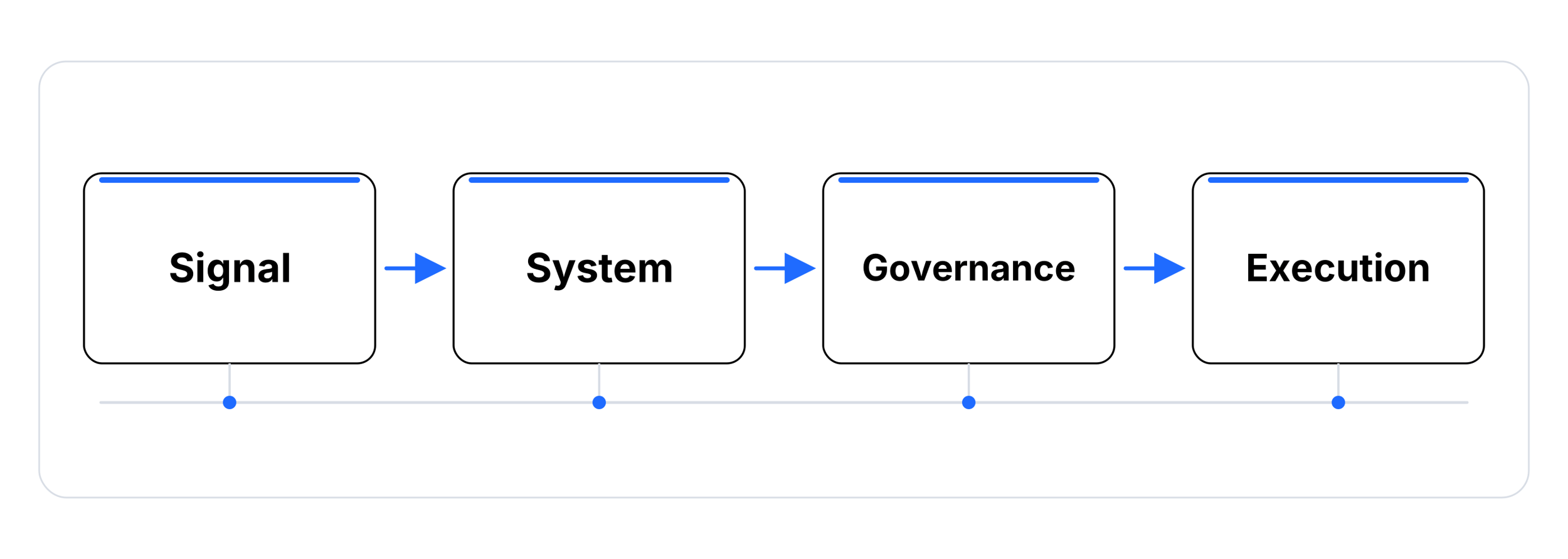
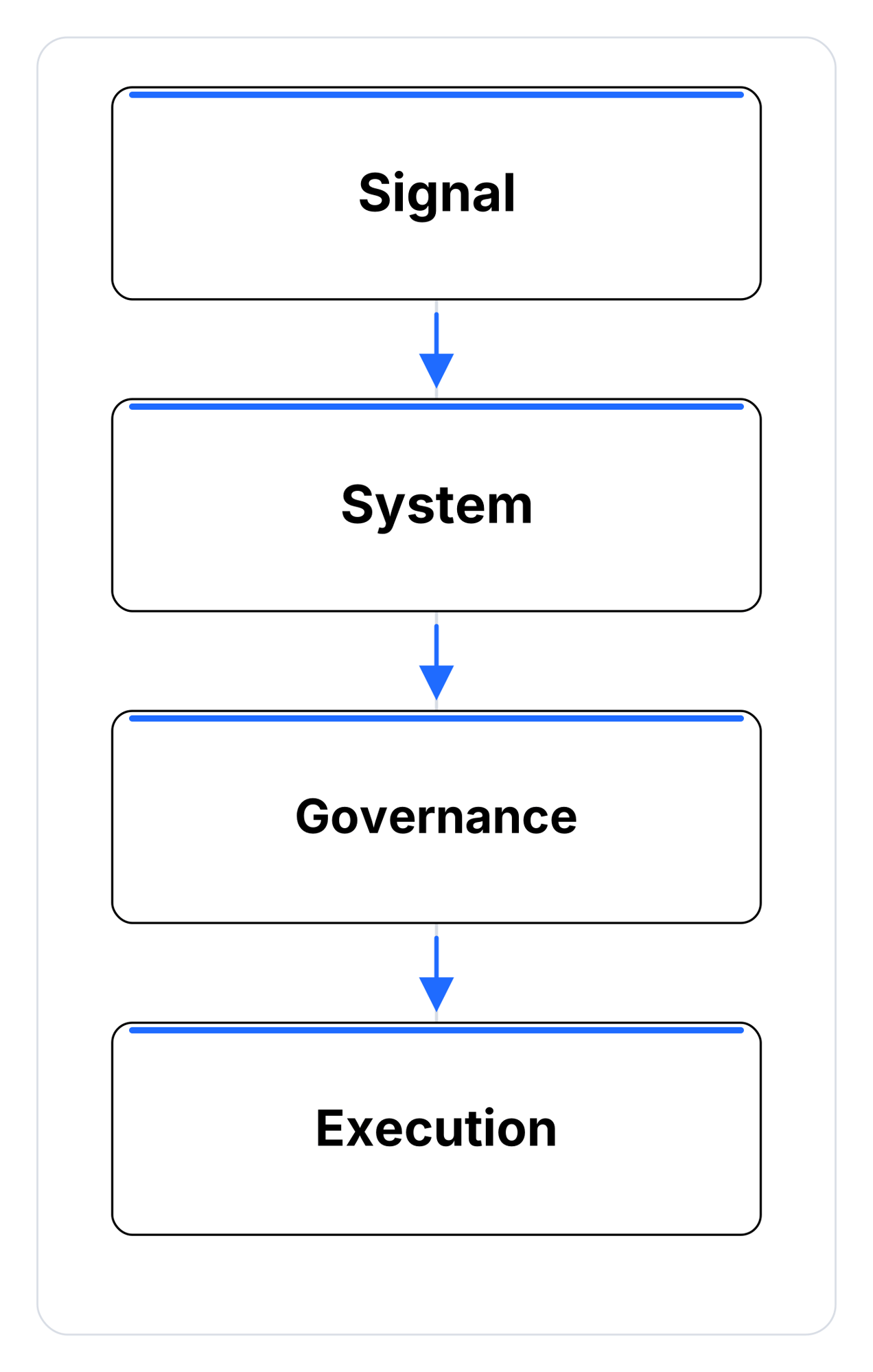
We identify where pressure, inconsistency, or breakdown is appears.
We design the structure required to manage the problem.
Teams work inside a clearer and more reliable operating environment.
The goal is not more process. It is a system people can trust and use.
THE GROWTH JOURNEY
A revenue system should not remain frozen while the company around it changes. Each stage builds on the structure established before it.
AN EXAMPLE IN PRACTICE
Consider a growing B2B company with active demand, a working sales team, and a CRM already in place. The company is growing, but the process underneath revenue has become harder to control.
Leads enter through several sources
Ownership changes depending on who notices the lead
Pipeline stages do not reflect what is actually happening
Follow-up depends on individual habits
Leadership does not trust the forecast
Map how work currently enters and moves
Identify the failure points and unclear ownership
Define the future revenue flow
Install ownership, routing, and lifecycle rules
Align the CRM and reporting with the new structure
Establish the review rhythm that keeps the system reliable
Clearer ownership
Cleaner handoffs
More reliable follow-up
Trusted reporting
Less dependence on founder memory and individual habits
START WITH THE CURRENT SYSTEM
A Revenue System Assessment shows where the current process is breaking, what is creating the pressure, and what should be addressed first.
<- PREVIOUS
02 / 05
WHO WE HELP
See whether EngineFlow fits your company and stage.
<- Explore Who We Help
See how EngineFlow identifies where your current revenue system is breaking.